ServicesConstruction Debris
Construction Debris Removal in Isleton
When the remodel is done and the scrap pile is still in the driveway, we load it, sort it and haul it away. You get a cleared site, a price set before we lift anything, and a crew that leaves the area swept.
What construction debris removal covers
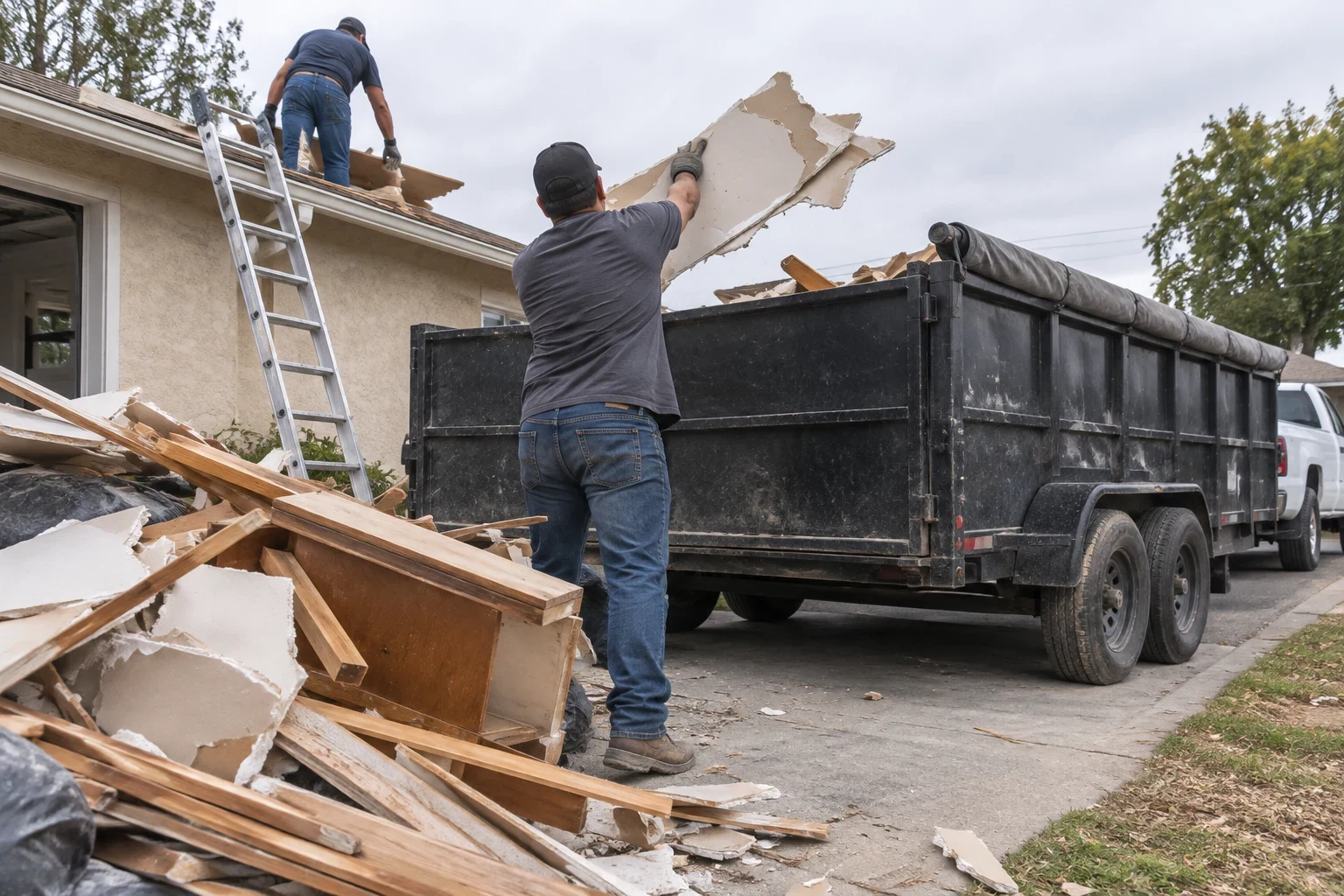
Renovation waste is not like household junk. Drywall offcuts are heavy and crumbly, old lumber carries nails and staples, and a single bathroom of tile and mortar bed can weigh more than a full room of boxes. We plan each load around what the material is, not just how much space it takes up.
This service fits homeowners who did the work themselves, contractors who left the haul-off out of their bid, and anyone with a pile that has sat in the side yard since spring. If a structure still needs to come down first, our light demolition page covers that part of the job.
What we load and haul
- Drywall and plaster
- Gypsum board breaks into dust as it is handled, so we bag loose pieces and load full sheets flat. Older lath and plaster is denser and we account for that weight in the estimate.
- Lumber and framing scrap
- Studs, plywood, trim and pallets often have nails sticking out. We stack them points down and keep them away from tires and walkways while we work.
- Tile, concrete and masonry
- Broken tile, thinset, brick and small slabs of concrete are the heaviest things on most job sites. Clean concrete and brick can often go to a recycler instead of the landfill, so we keep them separate when we can.
- Roofing and flooring tear-out
- Asphalt shingles, underlayment, old carpet and pad, vinyl plank and laminate. Wet carpet pad from a leak is heavy and we load it last to keep the trailer bed clean.
- Fixtures, cabinets and metal
- Old vanities, countertops, sinks, water heaters, ductwork and wire. Scrap metal goes to a metal recycler rather than into the general load.
- Sweep-up when the load is out
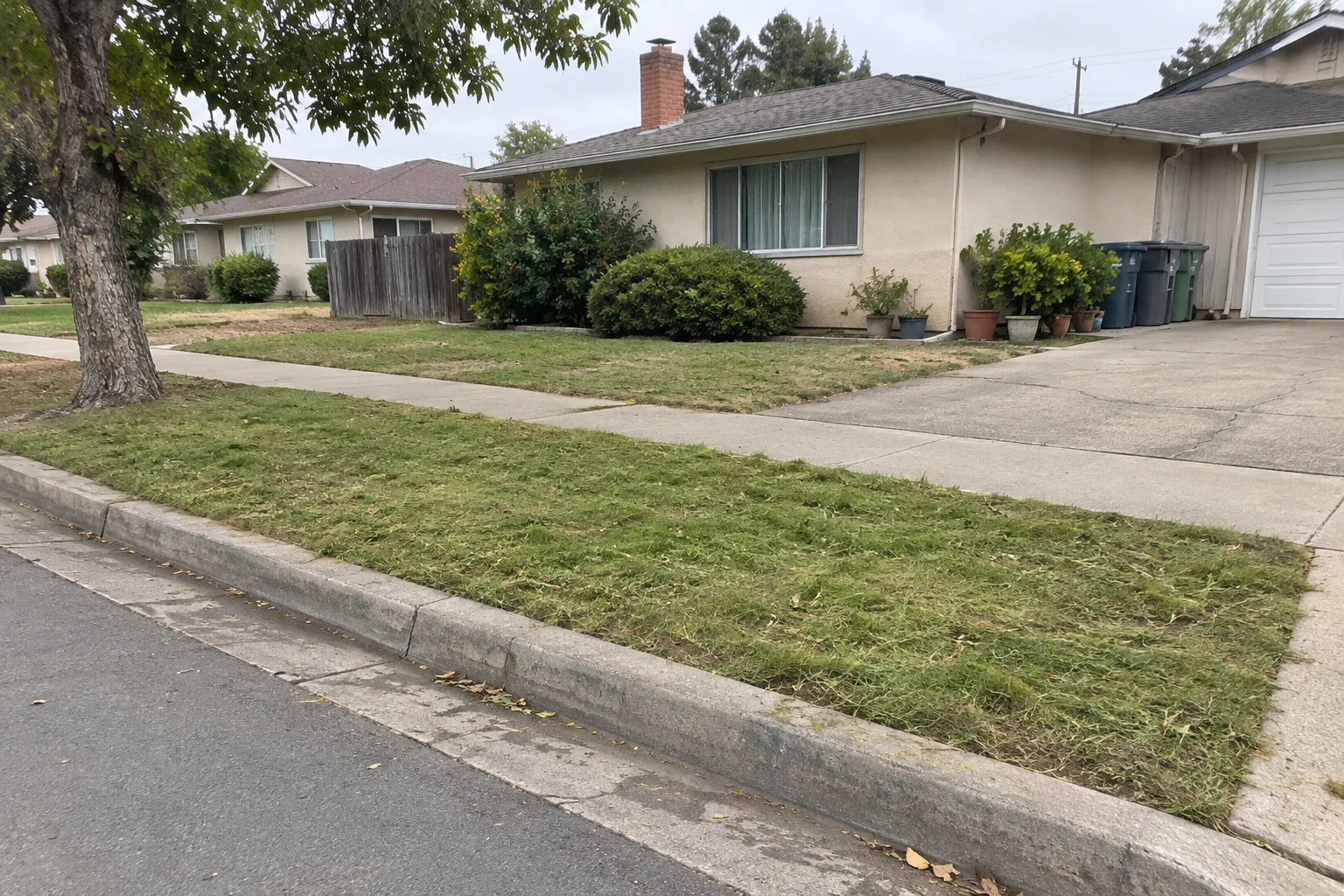
- Once the pile is gone we rake or sweep the area for screws, tile chips and drywall dust, so the spot is ready for your next step.
When a debris pile has overstayed
Dead patches in the grass
Sheets of plywood and tarps sitting on turf for a few weeks leave yellow, flattened spots. The sooner the pile goes, the sooner the lawn recovers.
Nails in the driveway
Loose framing scrap sheds nails and screws that find their way into tires and shoes. That is usually the moment people decide the pile has to go.
Your bin filled up halfway through
Curbside cans were never meant for tile and drywall, and a rented dumpster can fill faster than expected with heavy debris. We take what is left over.
Wet season is coming
Drywall and particleboard soak up winter rain, swell and get heavier to move. Hauling before the first storms keeps the job lighter and cleaner.
You are ready for the final walkthrough
A finished kitchen does not feel finished with a scrap heap by the garage. Clearing it is often the last item before you call the project done.
What sets the price
Construction debris is priced mostly by volume, but weight matters more here than with other hauling. A trailer half full of tile can be harder to move than a full load of carpet. We explain each factor on site so the number makes sense before you agree to it.
How heavy the load is
Concrete, brick, tile and plaster add up fast. Lighter tear-out like carpet, insulation and trim costs less for the same amount of space.
Total volume
How much of the truck the load fills is the starting point for every quote.
Where the pile sits
Debris stacked near the street goes onto the truck quickly. A pile behind the house, inside the garage or along a tight side yard means longer carries and more trips, and the estimate reflects that.
Sorting and recycling
Scrap that is already separated, or that can go straight to a recycler, can keep the disposal side of the cost down.
How the job runs
- 1
Talk it through by phone
Tell us what was torn out and roughly how big the pile is. We set a time to come look, and the estimate is free with no obligation.
- 2
See it and price it on site
We look at what is in the pile, how heavy it is and the path from the pile to the truck. The price we quote on site is the price you pay, with no hidden fees added later.
- 3
Load heaviest first
Masonry and tile go in first, low and centered. Metal and clean concrete are kept apart for recycling, and dusty drywall is bagged so it does not blow across your yard.
- 4
Sweep and leave
We clean up the area where the debris sat and check walkways for stray fasteners before we pull out.
Construction debris questions
Do I need to sort the debris before you arrive?
No. It helps if metal or clean concrete is already in its own pile, but we sort on site as we load. Just let us know if anything in the pile should be kept.
Can you take debris from an older home remodel?
We take ordinary demolition waste from homes of any age. Some older houses have asbestos in flooring, ceiling texture or pipe wrap, and that needs testing and a specialist abatement contractor, not a junk hauler. If you are unsure about a material, we will point it out during the estimate before anything is loaded.
Will the truck or the crew damage my driveway or lawn?
We plan where the truck parks and how the load comes out before we start, and lay down protection where heavy pieces cross finished surfaces. We are fully insured with commercial general liability coverage, which is worth asking any crew about before work on your property.
Do you take paint, solvents or other chemicals?
Not as part of a construction load. Leftover paint, thinners and adhesives belong at a household hazardous waste drop-off. Fully dried latex cans can sometimes go with the general load, and we will tell you on site.
Can you come to job sites outside town?
Yes. We regularly work in Rio Vista, Oakley, Antioch, Brentwood and nearby towns. The service areas page lists where we go.
Ready to clear the last of the remodel
Tell us what came out of the walls and floors, and we will come look and give you a firm number. If you also have old household items to go, our junk removal crew can take them on the same visit.