Junk Removal in Isleton, Sorted by What It's Made Of
We clear garages, yards, sheds, storage units and whole homes, then sort what we carry out before it ever reaches a dump. Metal goes to scrap, clean wood and usable goods go to reuse, and the rest goes to proper disposal. We work across Isleton and nearby towns like Rio Vista and Discovery Bay.
What Shapes the Price of a Cleanout
A cleanout is priced by what it takes to remove and properly place what you have, not by a flat guess over the phone. Volume matters most. The material and the route out of your home come right behind it.
Every estimate is free and given in person after we see the load. We walk you through the main line items, and you decide whether to go ahead with no obligation either way.
- How much space the load takes
- We measure by how much of the truck your items fill. A few bulky pieces and a packed two-car garage sit at very different points on that scale.
- Weight and density
- Concrete, brick, roofing shingles, wet soil and tile are dense, and disposal sites charge by weight for them. A small pile of broken patio slab can cost more to place than a large pile of cardboard.
- Items with special handling
- Refrigerators and freezers need their refrigerant handled correctly. Mattresses, tires and electronics each go to their own recyclers, and some carry fees at the drop-off.
- Access and carry distance
- Stairs, long walks from a back corner of the yard, narrow side gates and tight hallways all add time. Items we can roll straight from a driveway go faster.
- Taking things apart first
- Swing sets, built-in shelving, hot tubs and old sheds have to come apart before they can be loaded. That labor is figured into the estimate, along with any hardware we pull and sort.
What We Clear From Your Home
Most calls start with general junk removal or a garage cleanout, and plenty grow into yard debris removal or shed removal once the space opens up. We also handle construction debris after a remodel, light demolition of decks and fences, estate cleanouts, storage unit cleanouts, and apartment and move-out cleanouts. Bigger single items fall under furniture and appliance removal or general hauling. Each page below explains what that job involves and where the load goes once it is on our truck.
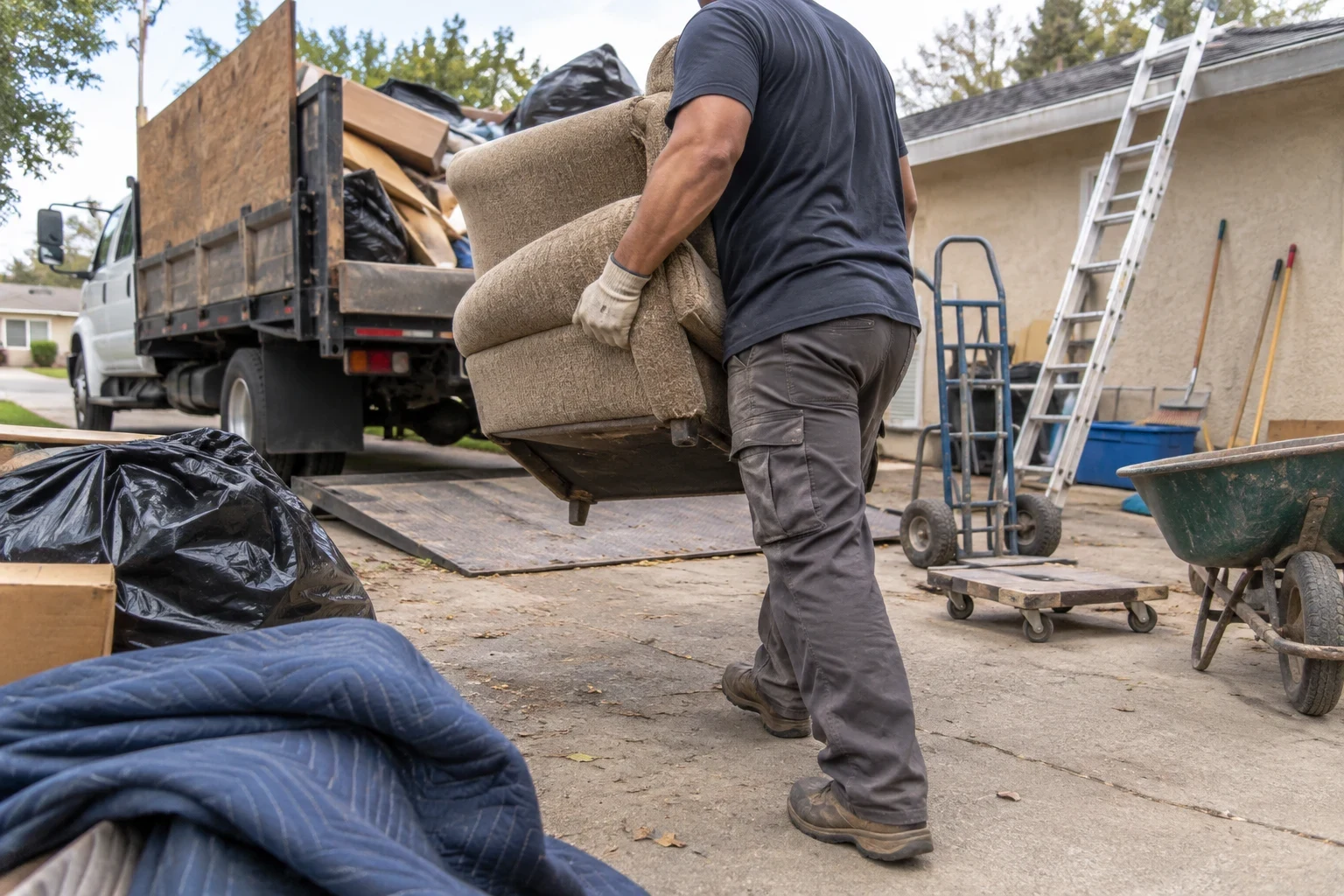
Junk Removal
We clear unwanted items from your home and yard, then sort metal, wood, electronics and the rest so each goes where it belongs.
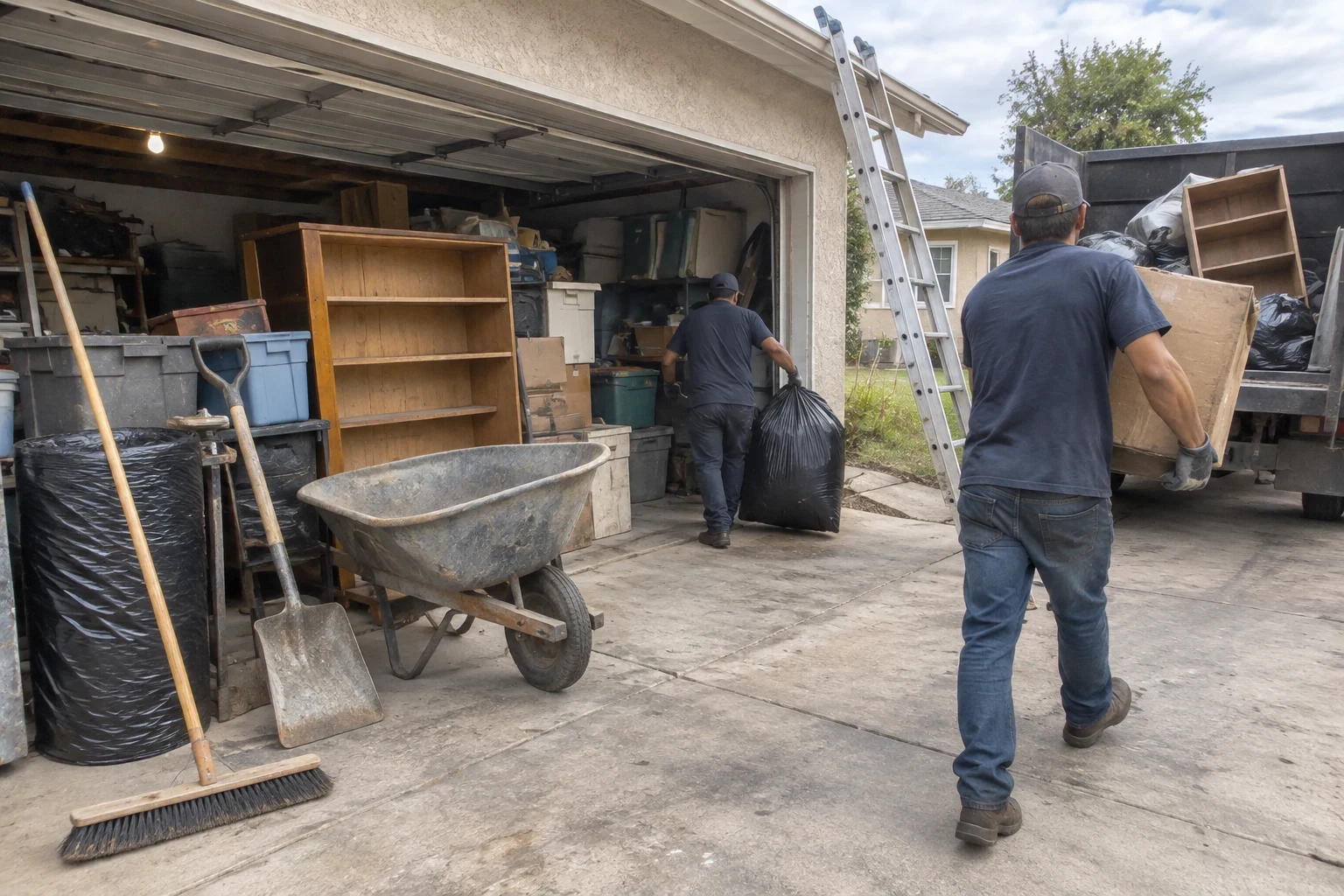
Garage Cleanouts
We clear out crowded garages, separate what we haul by what it is made of, and sweep the slab so you can park or work in the space again.
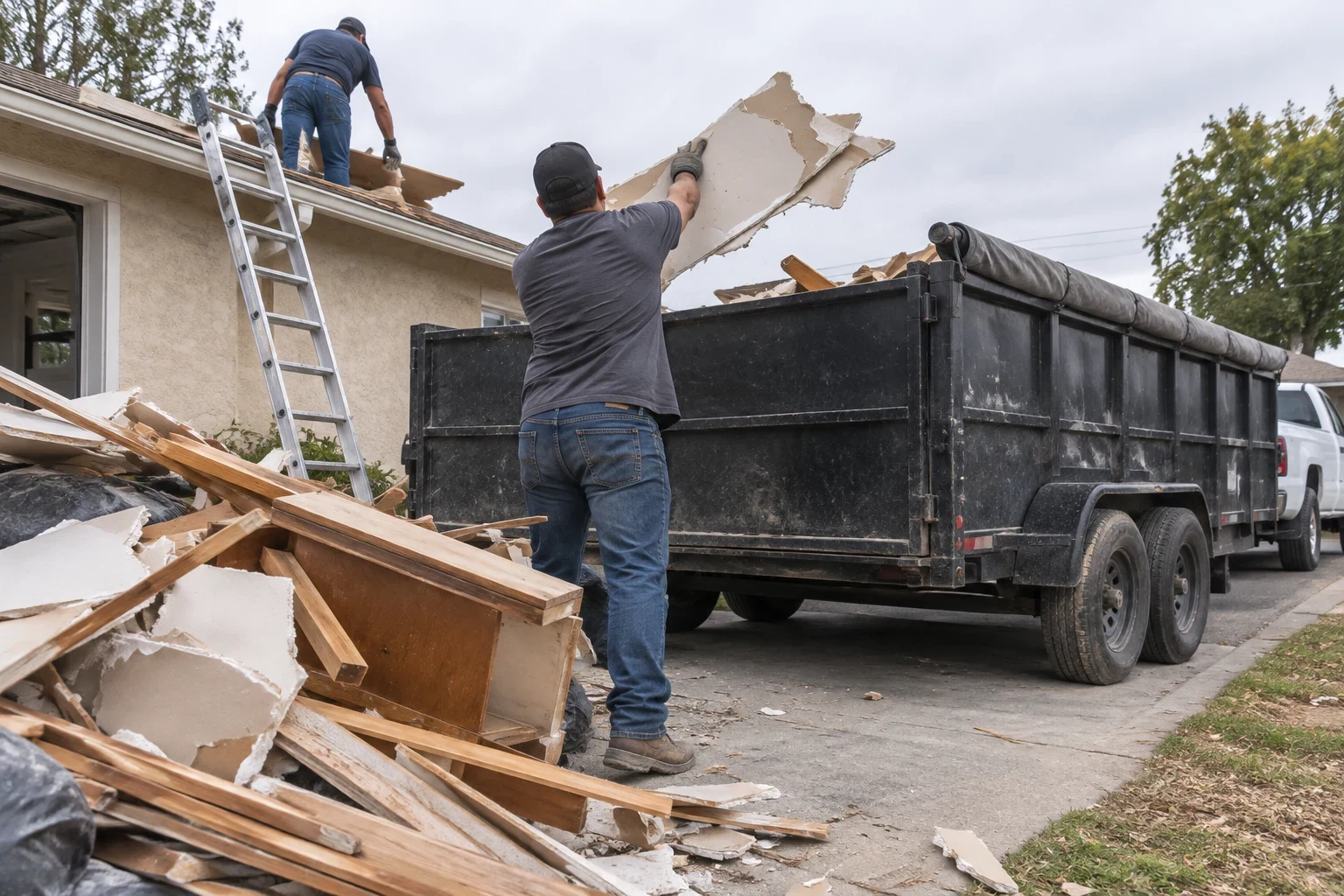
Construction Debris
We clear drywall, lumber, tile, concrete and roofing left from a remodel, keeping heavy and recyclable pieces apart so each goes where it should.
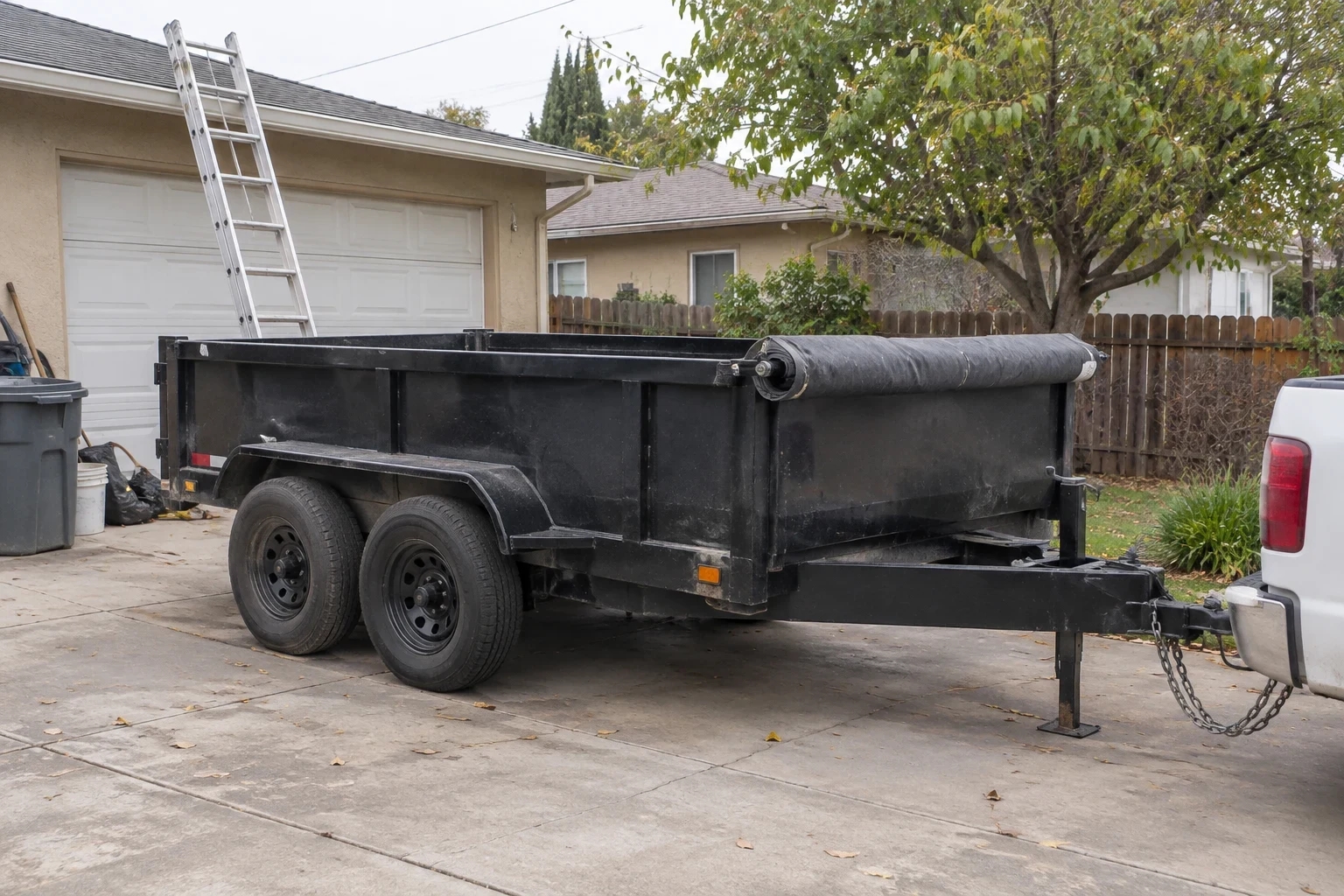
Hauling
Heavy or awkward loads like broken concrete, old lumber and scrap metal, loaded from where they sit and sorted so each kind goes to the right place.
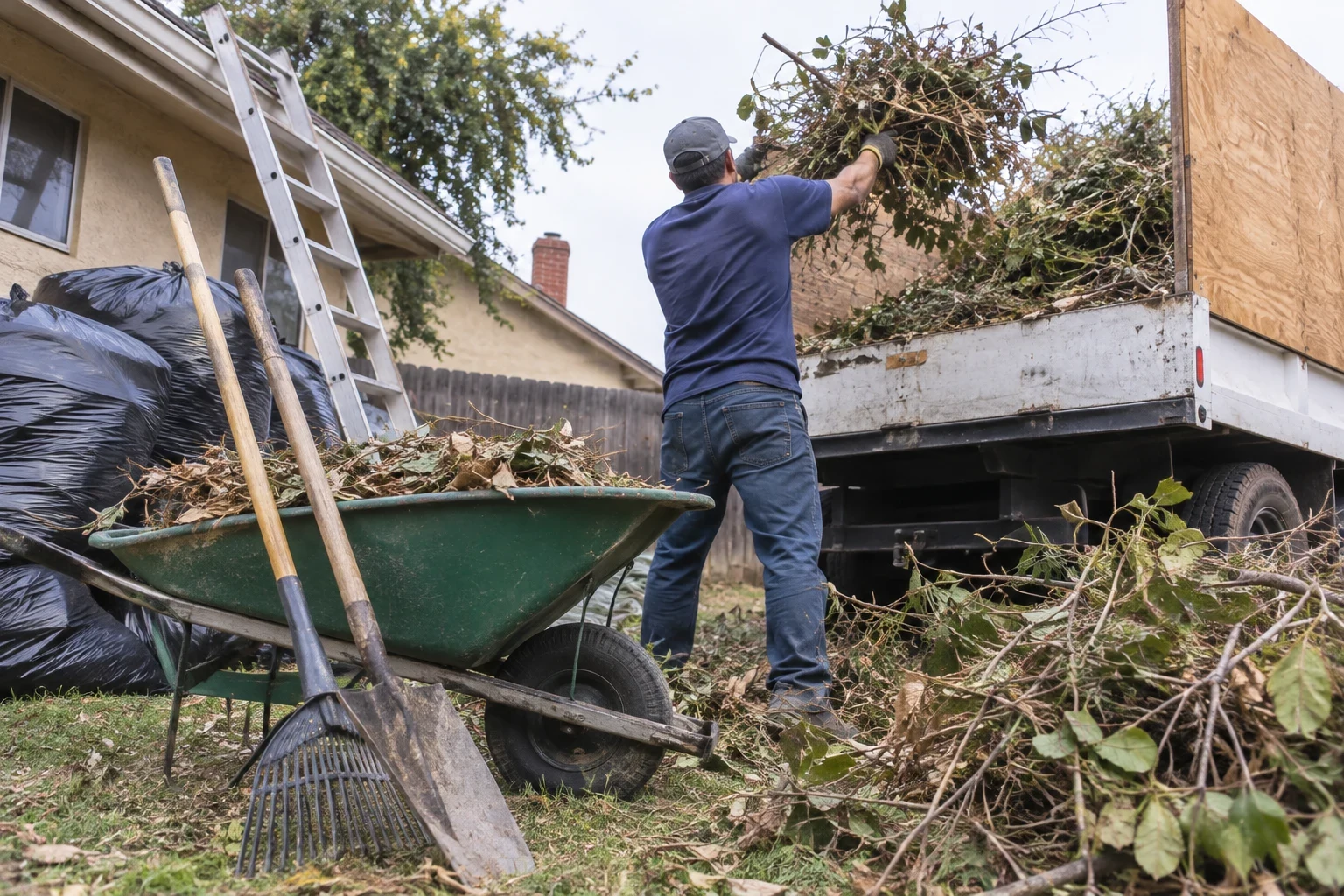
Yard Debris Removal
We load and haul branches, leaf piles, stumps, sod and soil, sorting green waste from heavier loads so each one goes to the right place.
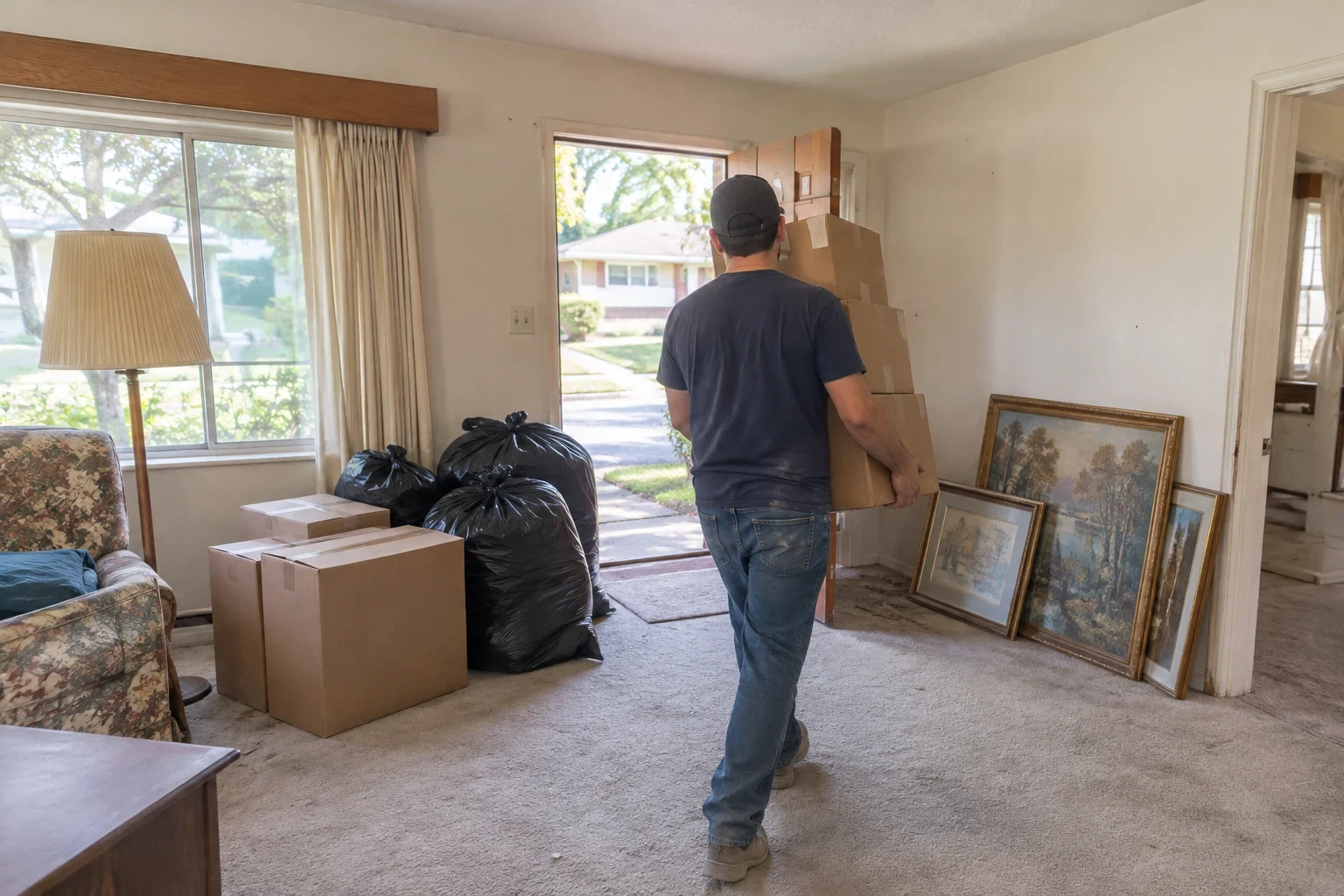
Estate Cleanouts
We clear a loved one's home room by room, setting aside keepsakes and sending usable goods to donation and metals to recycling before anything is hauled away.
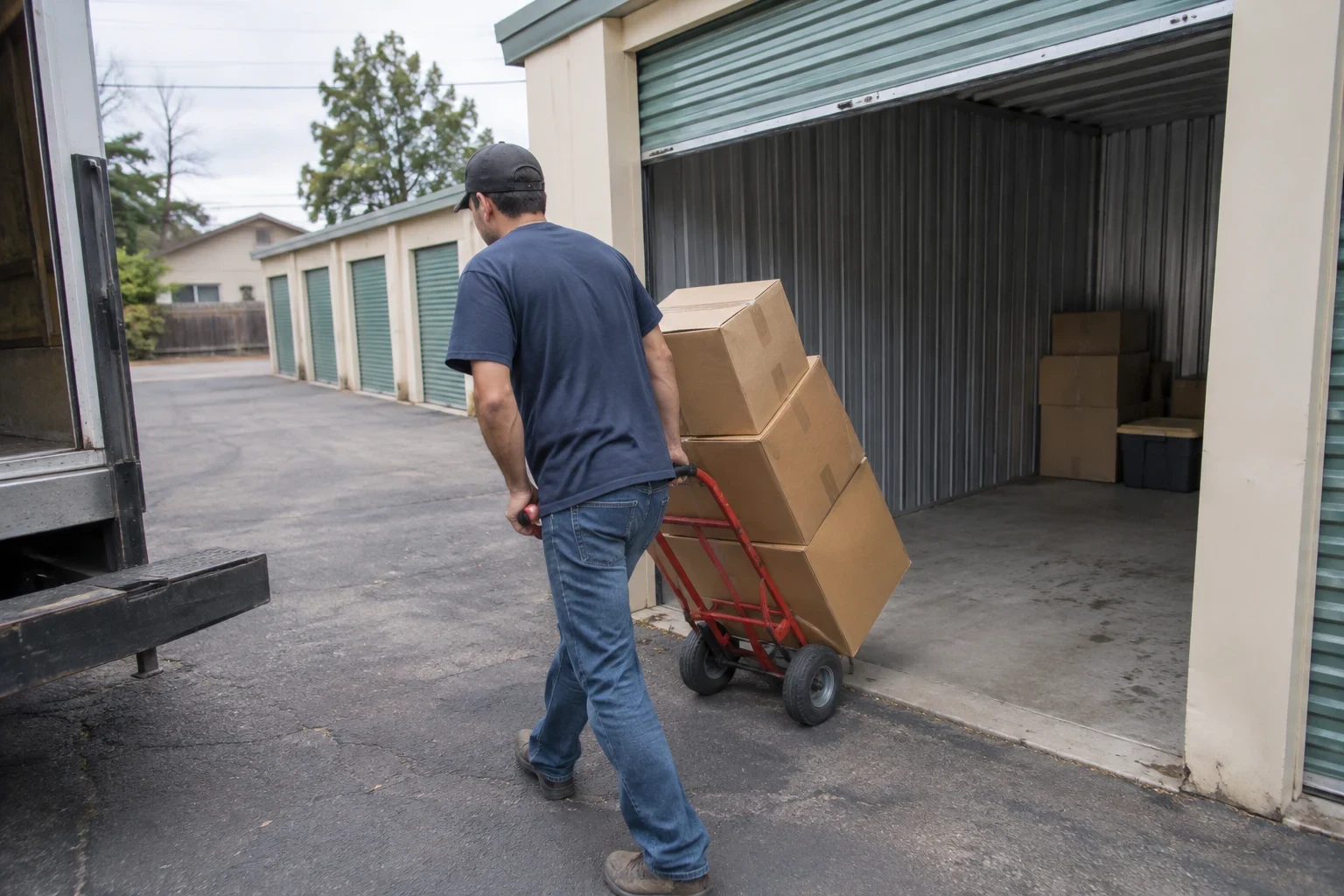
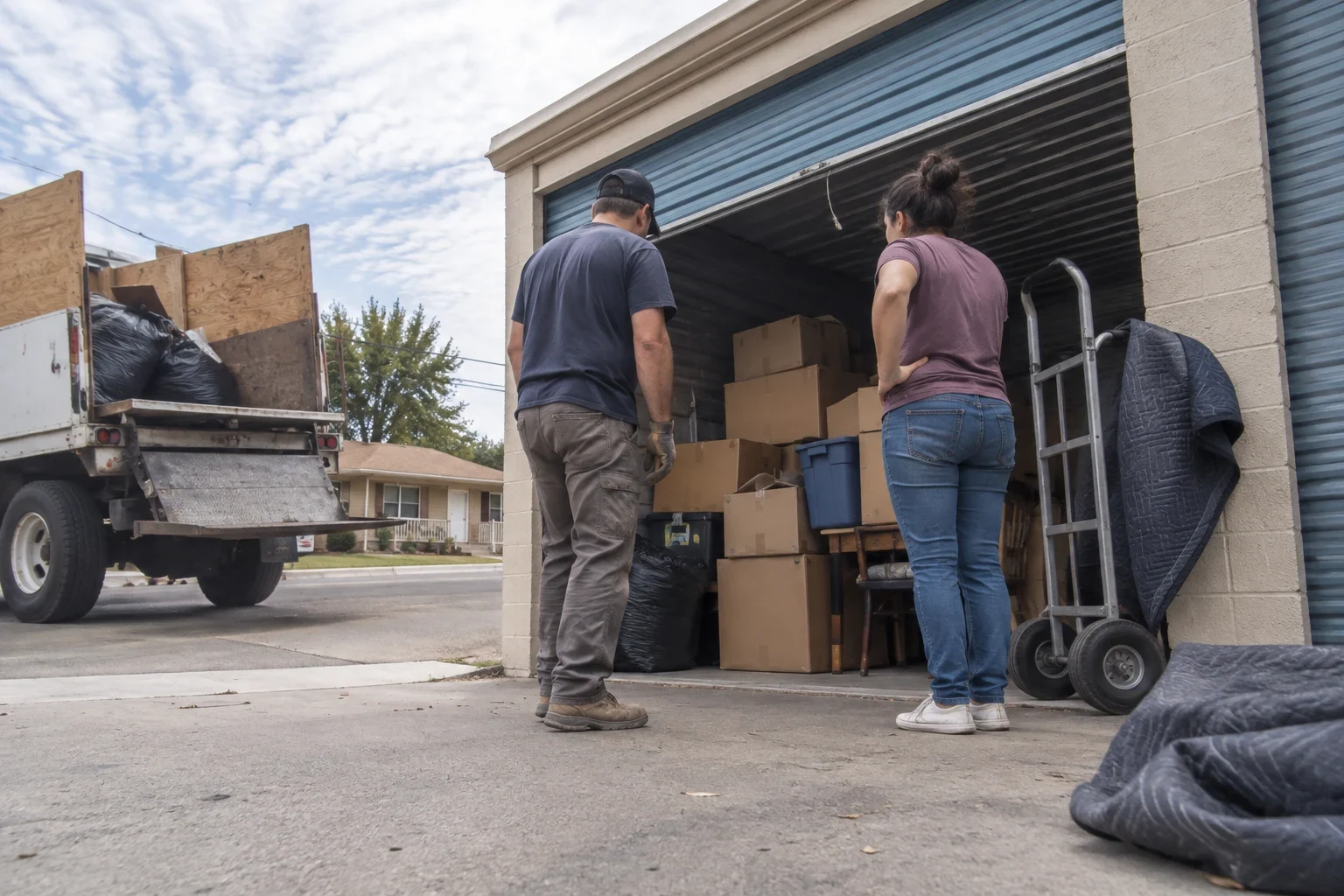
Storage Unit Cleanouts
We empty rented storage units, sort the contents by what can be donated, recycled or must be landfilled, and leave the space swept for move-out.
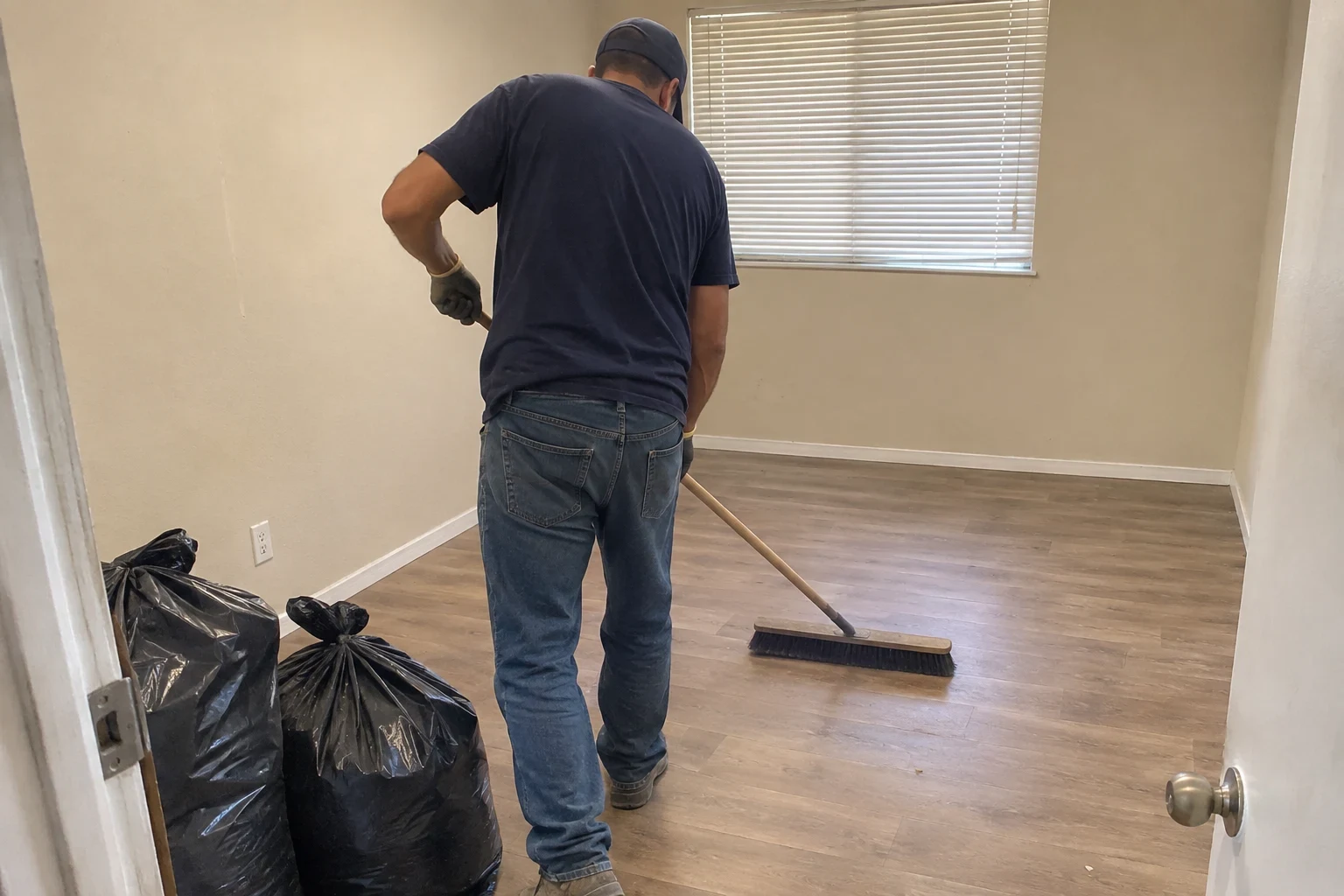
Move-Out Cleanouts
We clear apartments and homes at the end of a lease or sale, sorting each item so less of what you leave behind ends up in the landfill.
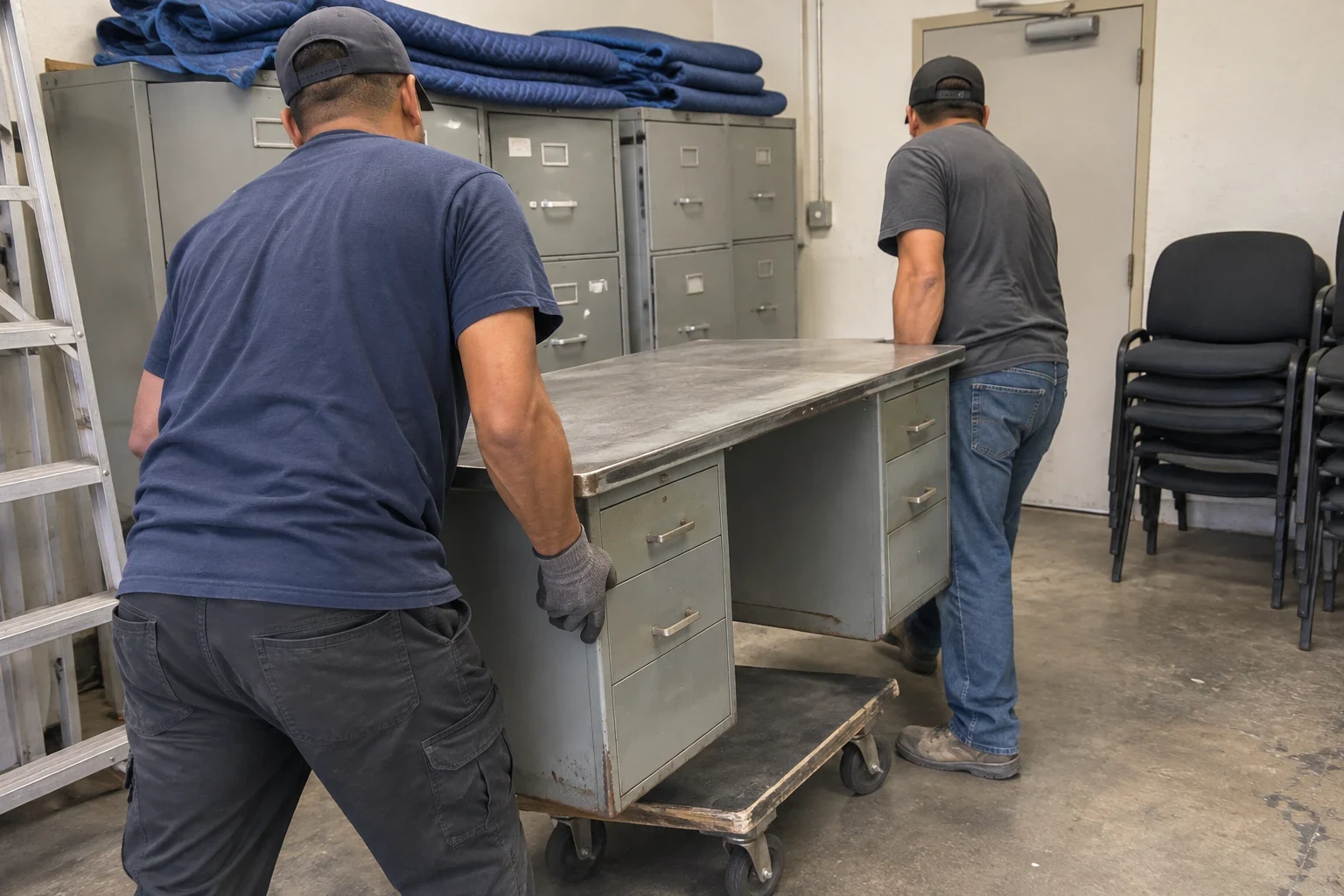
Commercial Junk Removal
We clear offices, shops and back rooms, sorting metal, wood, cardboard and electronics so each goes where it should.
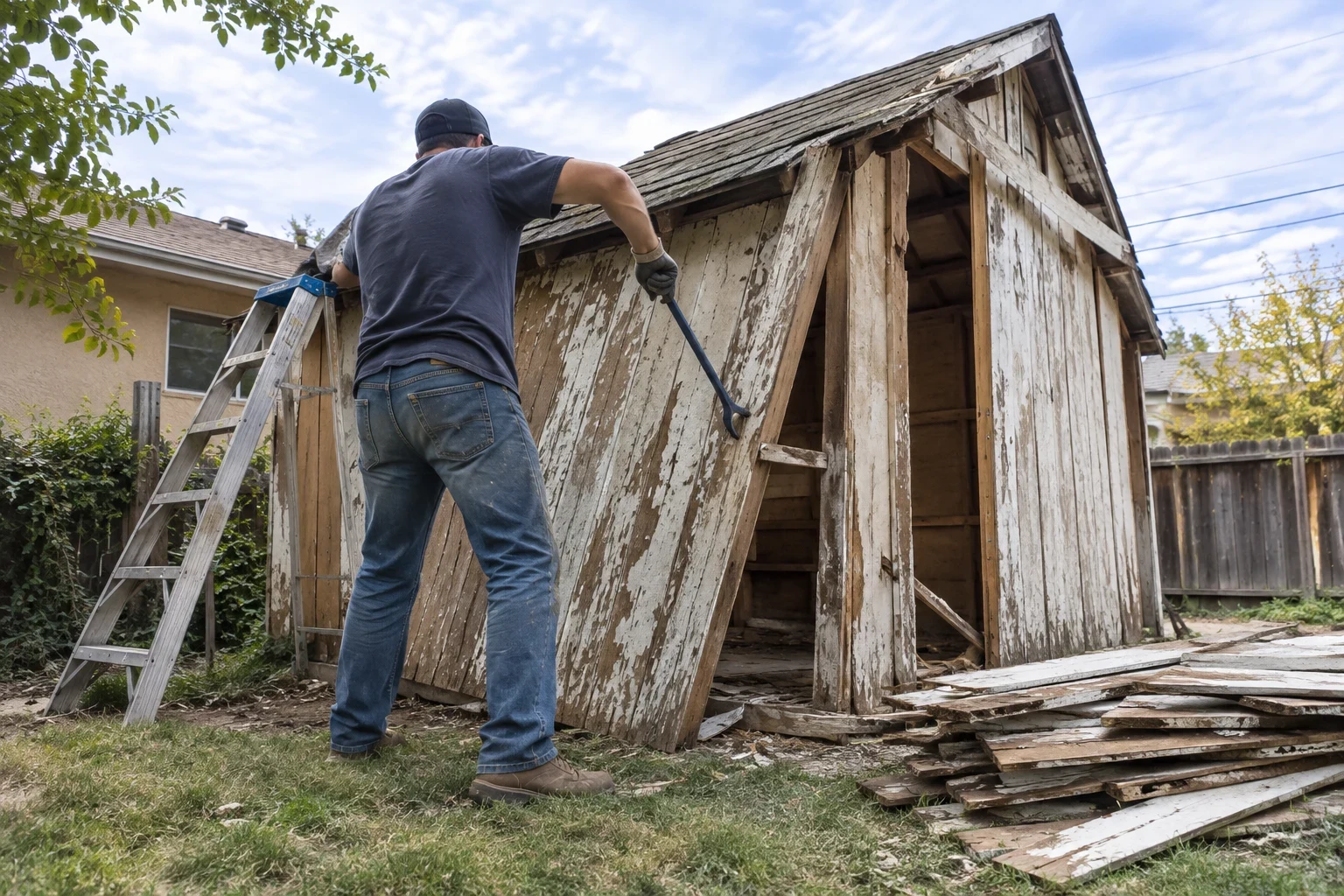
Shed Removal
We dismantle old wood, metal and resin sheds, sort the materials for recycling where we can, and leave the ground raked and ready for what comes next.
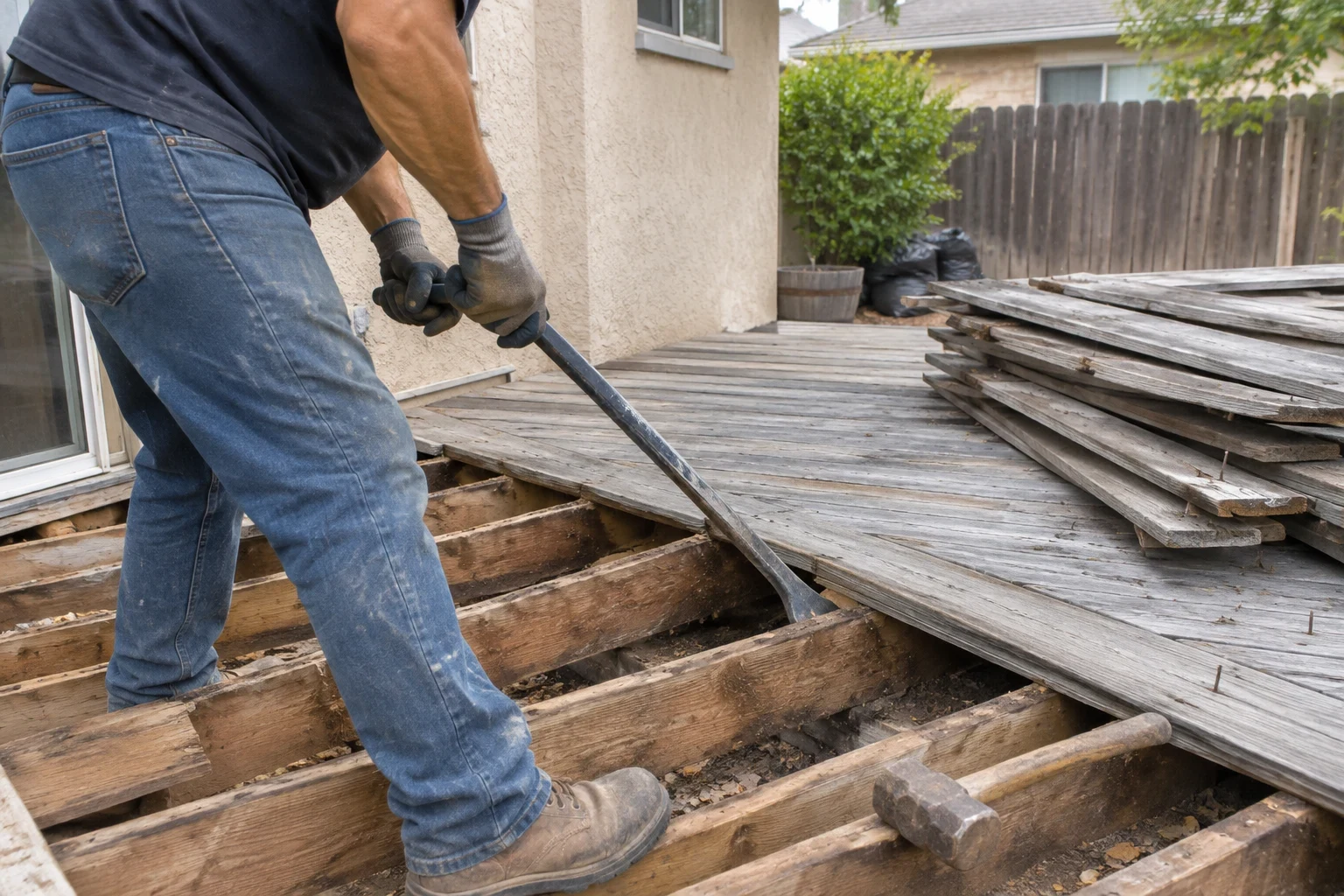
Light Demolition
We take apart tired decks, fences, hot tubs and playsets, sort the materials and haul every piece away, leaving the ground swept and ready.
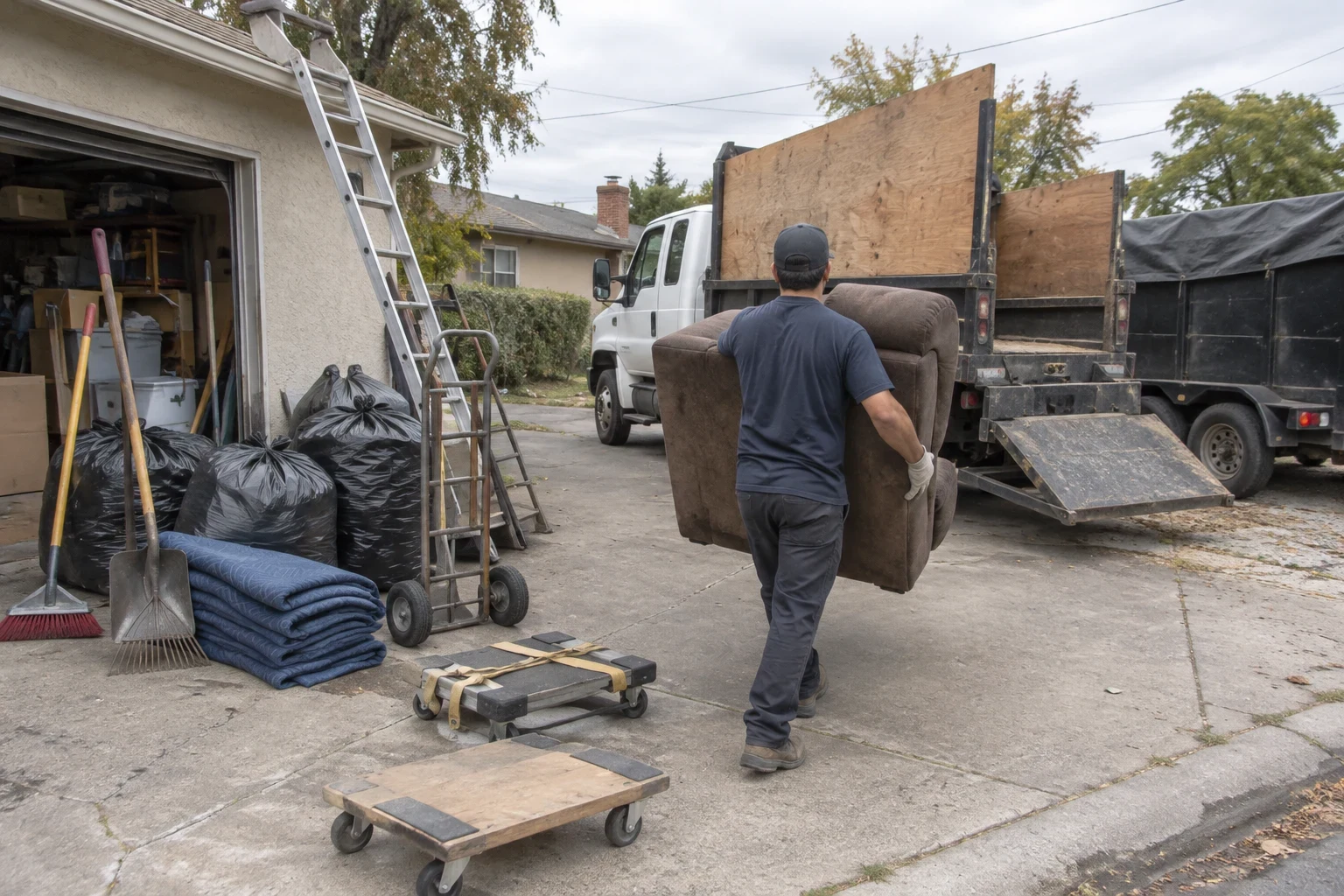
Furniture and Appliance Removal
Heavy pieces like sleeper sofas, refrigerators and washers carried out with care and sent to recycling, resale or disposal, depending on what each is made of.
How a Job Day Runs
Most jobs follow the same four steps, from the first phone conversation to the final sweep.
- 1
A short call
Tell us what you are clearing and roughly how much there is. We set a time to come look at it.
- 2
Walkthrough and estimate
We look over the load, point out anything we cannot take, and give you a price. Nothing moves until you say yes.
- 3
Careful loading
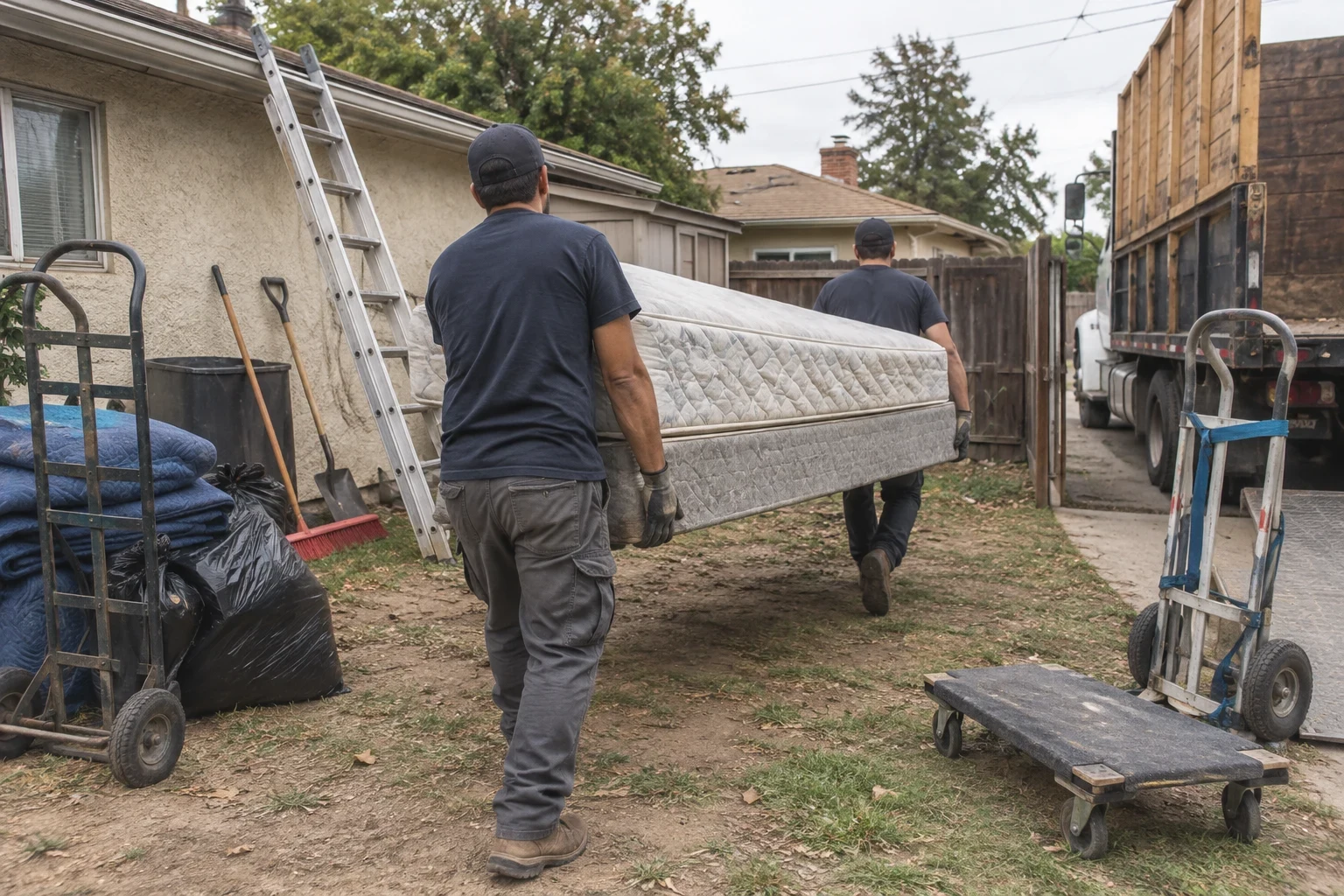
We pad floors and doorways, carry everything out, and separate metal, wood, donations and trash as we fill the truck. Heavy items go in first so the load rides safely.
- 4
Sweep and final look
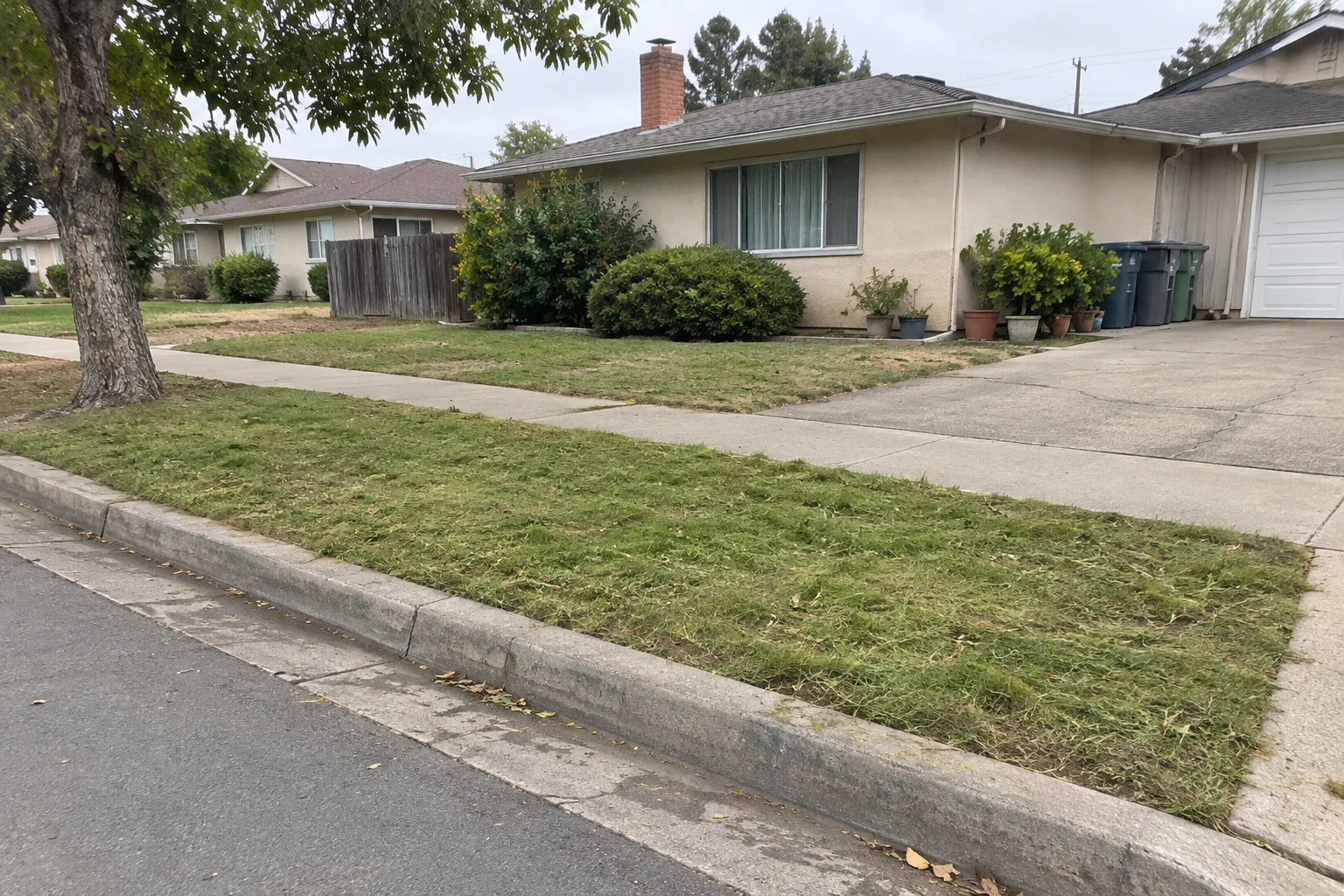
Once the space is empty, we sweep it and walk it with you. Then each pile goes to its own drop-off, whether that is a scrap yard, a donation center or a disposal site.
How We Handle What You Hand Us
Taking things away is the easy part. The care goes into how we carry them out of your home and where each piece ends up afterward.
- 01
Sorted by material, not tossed in one pile
Steel, aluminum and copper go to scrap recyclers. Untreated lumber, cardboard and green waste each have their own outlet. Pressure-treated wood, old carpet and broken drywall go to disposal, because no one can reuse them safely.
- 02
Usable goods get a second home
Working tools, sound shelving and boxed housewares that still have years of use in them go into their own stack for donation. On the walkthrough we say which pieces we think a charity will accept, so nothing comes as a surprise.
- 03
Care on the way out
We lay pads on finished floors and door thresholds before we carry anything heavy. We take doors off their hinges when that is safer than squeezing a load past painted trim, and we walk paths first to check for loose pavers and low branches.
- 04
A plain answer on hazardous items
Old paint, solvents, pool chemicals and suspected asbestos are not things we load. We tell you that on the walkthrough and explain where those items need to go, rather than leaving them behind with no word.
- 05
Pricing you hear before we lift
You get the number while we are standing in front of the pile. If you want to keep a few things or do part of the job yourself, we adjust the estimate right there.
Where We Work
We are based in Isleton, CA, and we regularly clear homes in Rio Vista, Oakley, Antioch and Brentwood. We also travel to Discovery Bay, Lodi and Woodbridge for cleanouts, demolition debris and larger hauls.
- Isleton
- Rio Vista
- Oakley
- Antioch
- Lodi
- Brentwood
- Discovery Bay
- Woodbridge
If your home is near any of these towns and you are not sure we reach you, ask when you call. We will give you a straight answer.
Questions We Hear Most
How do you set the price?
We come out, look at the load and give you a price on the spot. It is based on how much truck space your items take, how heavy they are, and how hard they are to reach. The estimate is free, and you are under no obligation to book.
What happens to my things after you haul them?
We sort as we load. Metals go to scrap recyclers, usable housewares and tools go to donation when they are in good shape, clean wood and green waste go to recycling outlets, and only what is left goes to disposal. If you want to know where something specific is going, just ask.
Is there anything you will not take?
We do not take hazardous items such as paint, solvents, motor oil, pesticides, pool chemicals or anything suspected of containing asbestos. We will point them out during the walkthrough and explain that they need to go to a household hazardous waste drop-off. Almost everything else in a typical garage or yard is fine.
Do you clean up after the job?
Yes. We sweep the space once it is empty, and our clean-space guarantee covers what we leave behind. If anything we agreed to take was missed, we come back and remove it at no charge.
Can you take old refrigerators and other appliances?
We can. Refrigerators, freezers and window air conditioners hold refrigerant, so we take them to facilities that recover it properly before the metal is recycled. Washers, dryers, water heaters and ranges go straight to scrap.
Do I need to be home while you work?
For the estimate, it helps to be there so we can agree on exactly what goes. For the job itself, many people leave the garage or gate open and let us work. We confirm what is staying before we start.
Can you take down an old shed or deck too?
Yes, that falls under our shed removal and light demolition work. We take the structure apart by hand, separate the lumber, metal roofing and hardware, and haul it all away. Concrete footings and slabs are discussed on the walkthrough, since they change the effort and the price.
A Small Crew That Pays Attention to Where Things Go
Junk Removal Isleton grew out of a simple idea. A truckload of household clutter is really a mix of materials, and each one has a better and a worse place to end up. An old washing machine is mostly steel. A dismantled fence is often redwood or cedar that someone can still use. A pile of yard waste can become mulch instead of landfill.
We work at your home, mostly outside, in garages, side yards and driveways, and we treat the space the way we would want ours treated. That means asking before we move anything you have not pointed to, keeping the work area tidy as we go, and leaving the floor swept. In summer we start early so heavy carrying is done before the worst heat of the afternoon.
- Insurance
- Fully insured (commercial general liability)
- Warranty
- Price quoted on site is the price you pay, no hidden fees
Let's Look at What You Want Gone
Walk us through what needs to go, first by phone and then in person. Before a single item leaves your home, you will know the price and where each part of the load is headed.