ServicesCommercial Junk Removal
Commercial Junk Removal in Isleton
We clear out stockrooms, offices, storefronts and yards for local businesses. Every load is sorted by material before it leaves, and the price we quote on site is the price you pay. You keep working while we carry, sort and sweep.
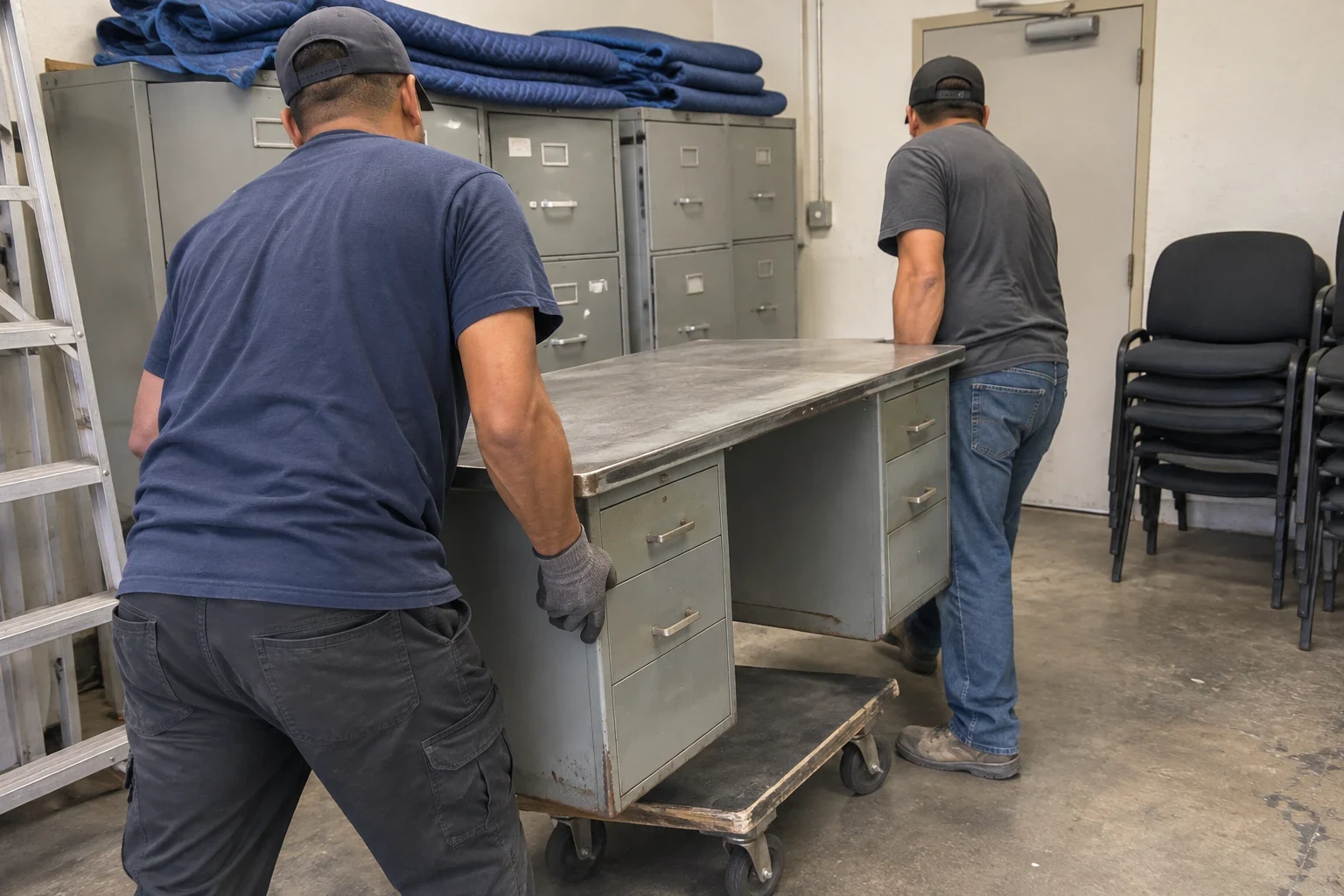
Clearing business spaces without slowing the business
Commercial junk rarely arrives in one tidy pile. It builds up as broken display fixtures, retired equipment, stacks of pallets, outdated electronics and boxes nobody has opened in years. We take it out in a planned order so walkways and doors stay usable while we work.
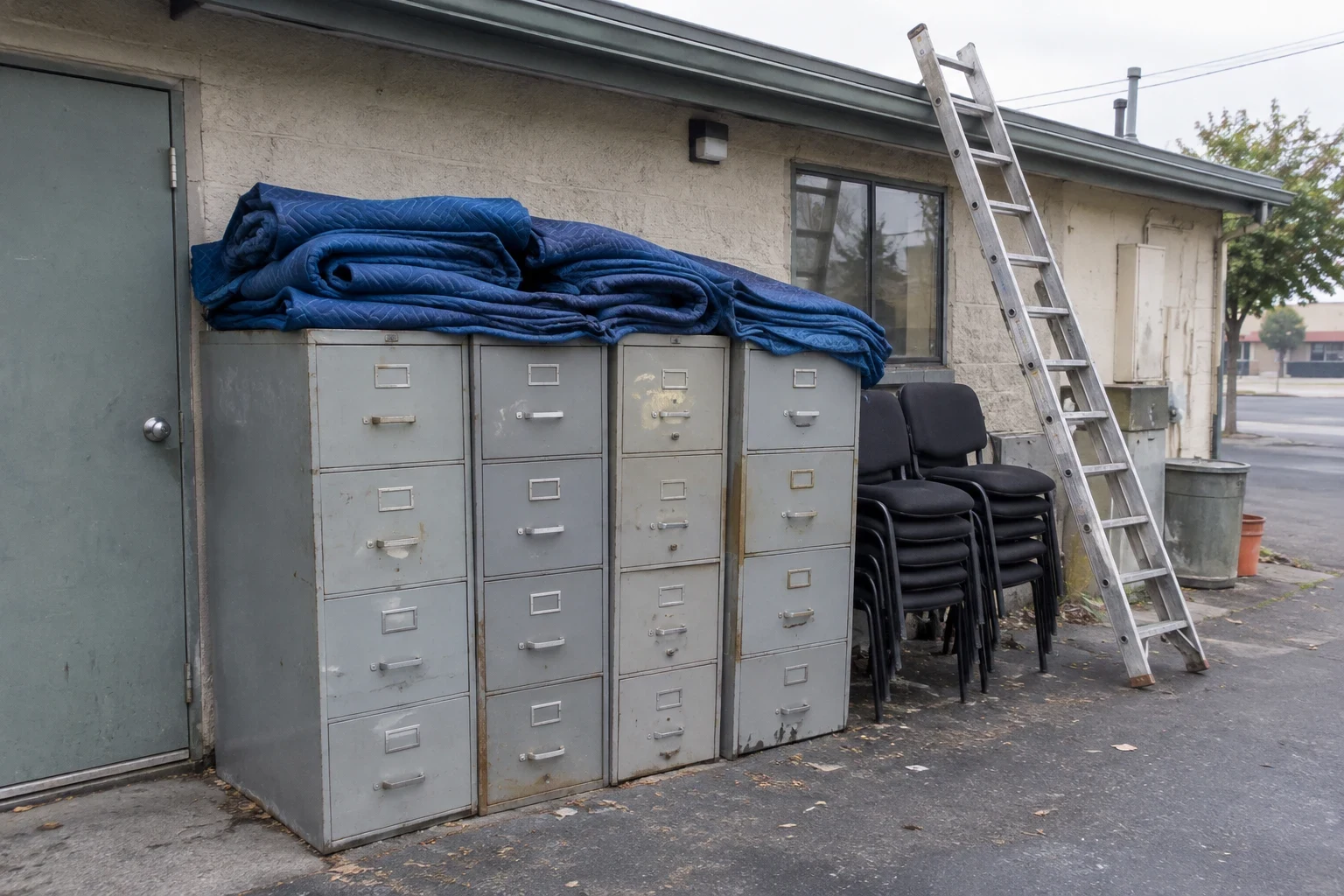
Material matters more here than with a household load. Steel shelving and racking can be recycled as scrap. Clean cardboard and untreated pallets have their own outlets. Computers, monitors and printers count as e-waste in California and cannot go to a landfill, so we set them aside and route them correctly. Particleboard, laminate counters and worn carpet usually end up as landfill, and we tell you that plainly rather than pretend otherwise.
We serve businesses in Isleton and nearby towns such as Rio Vista and Brentwood, from single-room offices to warehouses and shops with loading areas.
What a commercial job includes
- Walkthrough and written price
- We look at the space, the items and the access, then give you one price before any lifting starts. That number holds, and no hidden fees show up afterward.
- Metal racking and shelving
- Gondola shelving, wire racks and steel cabinets are broken down where they stand. Steel is heavy but valuable as scrap, so it goes to a metal recycler instead of the landfill.
- Electronics and e-waste
- Old computers, monitors, phones and printers are kept separate from general debris. We handle them as California e-waste and leave data-bearing drives in your hands if you want to keep or destroy them yourself.
- Pallets, cardboard and packaging
- Intact wood pallets and flattened cardboard are bundled on their own. Treated, broken or soaked pallets are sorted out, since they are not accepted everywhere clean wood is.
- Fixtures and build-out leftovers
- Counters, display cases, signage and leftover panels from a past remodel are removed and sorted by what they are made of. Glass, laminate and composite board each get handled differently.
- Broom-clean finish
- With the truck loaded, the crew sweeps the floor where everything stood. The room is ready for a new tenant, a fresh layout or your own staff to move back in.
Signs it is time to clear the space
Storage has replaced working room
When a back room or stockroom is mostly things you no longer use, you are paying rent to store junk.
Old equipment is a safety issue
Stacked monitors, leaning racks and loose pallets block exits and invite trips. Clearing them is often the fastest safety fix you can make.
You are moving, closing or remodeling
A lease ending or a new layout means fixtures and leftovers have to go before the next step can start.
E-waste has piled up
Electronics cannot go in the regular dumpster in California. If they have been collecting in a closet, they need a proper route out.
The dumpster is always full
If your regular service cannot keep up with bulky items and packaging, a one-time cleanout resets things.
What moves the price of a commercial cleanout
Price comes down to how much we take, what it is made of and how hard it is to reach. We see all of that at the walkthrough, which is why we quote on site. Our business is fully insured with commercial general liability coverage, so that cost is already part of the work, not an extra line.
Volume and weight
How much truck space the load fills is the main driver. Dense loads such as steel, glass and wet cardboard weigh more and can raise disposal costs.
Material mix
Scrap metal and clean cardboard are cheaper to dispose of properly than mixed debris. E-waste and items like fluorescent tubes need separate handling, which affects the price.
Access and carry distance
A ground-floor loading door is quicker than stairs, a long hallway or a narrow back entry. Upper floors and tight parking add time.
Breakdown work
Racking bolted to walls or floors, built-in counters and large fixtures take labor to dismantle before they can be carried.
Timing
Working around open hours, in phases or early in the day may change how long the crew is on site.
How the work goes on the day
- 1
Phone call and site visit
You tell us what needs to go and when your space is quietest. We come out, look at the items and the access, and give you a price on the spot.
- 2
Plan around your hours
We agree on a start time that suits your staff and customers. Where it helps, we work section by section so part of the space stays open.
- 3
Carry, break down and sort
Our crew moves items out, dismantles racking and fixtures, and sorts each piece on the truck into metal, clean wood, cardboard, e-waste and general debris. We protect door frames and floors along the carry path.
- 4
Haul, recycle and sweep
Each load goes to the place that accepts it. The cleared area is swept, and we walk it with you before we leave.
Commercial junk removal questions
Can you work while we are open?
Often, yes. We stage the work so entrances stay clear and customers are not walking past a moving crew. For spaces where that is not practical, we plan the job for a quieter time you choose.
Do you take old computers and printers?
Yes. We keep electronics separate and route them as e-waste, since California does not allow them in the landfill. If any hold business data, pull the drives first or tell us and we will leave them with you.
Will the price change once you start?
No. The price we quote on site is the price you pay, with no hidden fees. If you add items that were not part of the walkthrough, we tell you before loading them.
Does someone from our business need to be there during the job?
Ideally someone meets the crew when we arrive and points out anything that is staying behind. Once that is settled, many owners return to their own work and rejoin us for the final walkthrough. A strip of tape or a written note on keeper items lets us steer around them.
What happens to shelving and fixtures you remove?
Steel shelving and racks go to a scrap metal recycler. Clean wood and cardboard are recycled where accepted, and laminate, particleboard and mixed debris go to disposal. We will tell you where each part of your load is headed if you ask.
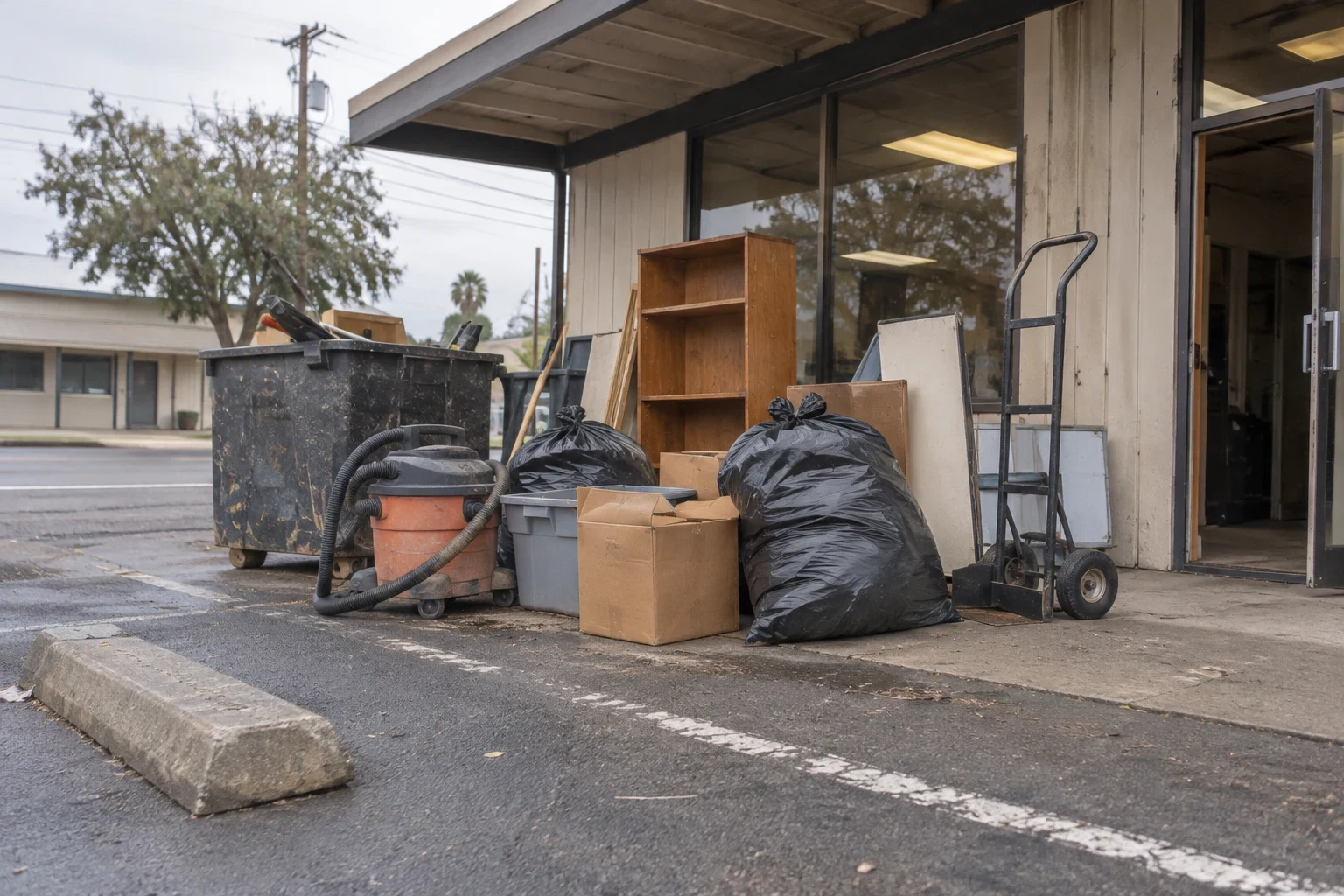
Get the back room back
Walk us through what is crowding your space on the phone, then we visit to see the items and the access for ourselves. You hear one clear price before anything gets lifted.